I have a great appreciation for wordless picture books. They are a very pure form of picture books, telling entire stories with images alone.
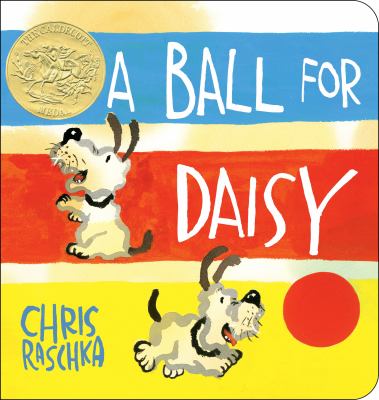
Chris Raschka’s 2011 picture book A Ball for Daisy is a great example of what wordless picture books can be and do.
The premise is simple, as is the overall arc of the story. Daisy (a dog) loves her ball and plays with it all the time.She sleeps with it and takes it with her everywhere. However, when she takes it to the park, she gets separated from it. Another dog starts playing with it, and, when Daisy chases this other dog, the ball bursts. Daisy goes home extremely sad. Her humans try to comfort her, but nothing really works until they go back to the park and this other dog (and its human) have brought Daisy a replacement ball. The dogs play together, Daisy gets to take the new ball home, and everything is as it should be.
However, while the story is relatively simple, the images are superior. They capture dog and human motion and emotion exceptionally well.
The story also moves through complex emotional development and character change: not only is Daisy sleeping happily at the end, she has a new friend (and, it appears, the humans involved become friends too). There’s a visceral sense of justice and human /animal, parent/child boundaries.
And Raschka clearly knows dogs.
I’m obviously not the only one who thinks this way; this book won the 2012 Caldecott.