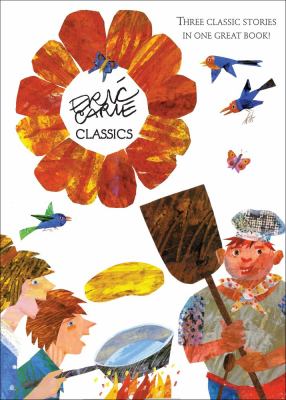
It is hard to say too much good about Eric Carle‘s work. Everyone knows–or should know–his most famous works, like The Very Hungry Caterpillar.
However, as much as I love his work, I hadn’t read all of it, so I recently picked up a collection from the library and read The Tiny Seed (1970).
Open the book, and see wonder. The colors that fill the pages and the motion visible on every page are striking: they model what children’s books can and should be, visually.
The idea was just as fitting. The book starts in fall, and follows a bunch of seeds as they are blown across the land.
The tension between the shared identity (they are all seeds) and the randomness of weather both provides an easy structure to the book: there’s variety and continuity, and the ongoing question of what will happen to the seeds. The book wouldn’t have to do this, but it also changes scale: some images show entire mountain ranges, while others focus on just a bird and a seed.
The book moves through the seasons, following seeds along their way, and shows us what happens to the tiny seed, which becomes a tremendous flower with great emotional weight.
The images, ideas, and emotions are all great. I have only one issue: by modern standards, the book is pretty wordy. Some pages over-explain, giving details kids don’t need or could get from the pictures. (This isn’t true of Carle’s more famous work.)