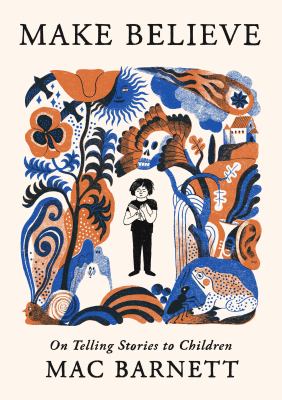
A few days ago I posted my first thoughts on Mac Barnett‘s book Make Believe: On Telling Stories to Children, which came out this week. I had pre-ordered it months ago, and read it the day I got it.
Perhaps because I grew up reading science fiction, my response to the book was considerably different from many people’s responses. Waaay back in the 1950s, science fiction author Theodore Sturgeon articulated what’s become known as Sturgeon’s Law. At that time, science fiction was held in low esteem, only a step above pornography, and was often dismissed. Sturgeon’s Law is a response to that dismissal, and says, that yes, most science fiction is crap, but “Ninety percent of everything is crud.”
Barnett builds on this, and offers “Barnett’s Addendum to Sturgeon’s Law: Maybe more like 94.7 percent of kids’ books are crud” (p. 19).
That line angered a lot of people in the kidlit world. There are calls for Barnett to lose his position as National Ambassador for Young People’s Literature, (Fast Company sums up that firestorm here.) Their anger caught me completely off guard, and I had a series of thoughts on the addendum and the community response.
First, Barnett’s take on Sturgeon may be part of the reason I was underwhelmed by the book. It shows how differently we see children’s books. I started reading children’s literature methodically a couple of years ago, and I’ve been stunned by how high the quality is. Some of this is the fact that I’m not a visual artist, so I am often pleased by the images even if the story is flat. More of it, though, is recognizing that children’s books are trying to reach several markets and navigate several currents of tradition: kidlit is education AND/OR entertainment AND/OR cultural heritage AND/OR people passing on the stories that meant a lot to them when they were kids AND/OR kids being part of their first artistic communities (think of the Harry Potter parties) AND/OR dealing with the fact that childhood has changed over time. That’s a lot! I often find children’s books do one, two, or even three of those things well, but not all of them.
To restate that more simply, kids’ books face more challenges than books for adults, and we should be awed that so many of them do so much so well.
Second, and even simpler, the kidlit community reacted with anger because it is under assault from all sides–and this seemed like betrayal by someone who should be their champion.
It isn’t betrayal, though as I’ve made clear, I disagree with Barnett’s reasoning and conclusions.
Third, the letter denouncing Barnett’s statement made some good points about who gets to decide what’s good–and who gets to decide what is didactic, something Barnett argues is distinct from good children’s literature.
And that brings me full circle to my personal response to the book: the reasoning lacked rigor. Some of the creators Barnett praised as examples of good children’s literature had strong didactic elements to their work. They were just smoother at it than the ones Barnett dislikes.
So… interesting times, interesting response, somewhat interesting read.