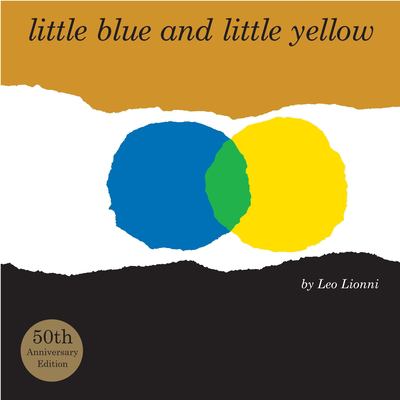
Leo Lionni was a towering figure in picture books. He published dozens of books, won multiple awards (including four Caldecott Honors), and…little blue and little yellow (1959) was his first picture book. Lionni was a painter and illustrator (and art director and faculty member), but this specific work has a much more domestic origin story. When he told his grandchildren stories, he drew pictures, but one time, he was on a train without drawing materials, and so illustrated the story with paper torn from a magazine, specifically blue and yellow circles for the main characters in this book.
Lionni was the first major figure to illustrate picture books using collage, and what’s striking about that choice here is how simple the images are, and yet how well they work as illustrations. Little blue is just a torn blue circle, but he has a blue family (of larger shapes). He has friends of different color, but is closest to little yellow, who lives across the street.
The illustration shows them playing (including a very abstract game of Hide-and-Seek), but the story changes when mama blue goes out shopping and leaves little blue at home. Rather than staying home alone, he goes out looking for little yellow. He finds her, and they hug so tightly they fuse into green. They play together, more adventurously than they did when their original colors, then go home.
However, both sets of parents reject them due to their changed colors. Little blue and little yellow weep until they are “all tears” (and literally tiny fragments of paper) and then go home. When little blue’s parents hug little yellow, they too turn green (in part and for a while), and this helps them realize what happened. They escort little yellow home and explain what happened, and everyone is happy.
BUT–and this is crucial–everyone and everything is also changed. Both little blue and little yellow and others among their dot friends of different colors now hug so tightly that they overlap and change colors regularly. Barriers are weakened; people change when they get close.
This book can be read as it is, for itself, but also, with tiny nudges, could be used to help kids understand diversity, difference, and community…and adults understand the need for change and acceptance.
One very nice touch that the book does not narrate: after the words “The End,” there’s a page with a single green dot.
Masterfully simple collage. Impressive meaning in just a few words.