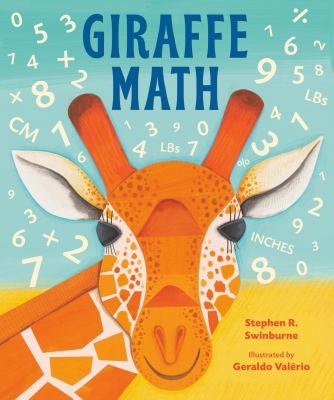
Stephen R. Swinburne’s 2023 picture book Giraffe Math includes good scientific facts for kids interested in giraffes (or nature/science more generally). Some of those facts are, as the title indicates, math-related. Some math factoids are on the simple or basic side. For example, once Twiga, the giraffe “tour guide” has introduced itself, the next page compares giraffe height (20 feet) with horses, third graders, and a dog (dachshund, specifically). Clear, and easy to understand. Within a couple of pages, we also get to compare a giraffe’s weight to other animals (blue whale, elephant, and adult human).
However, other math facts are a bit more complicated. Giraffes are shown arranging their bodies to drink water in the shapes of an isosceles triangle and an equilateral triangle….without explaining what those are. (There are diagrams, but no explanations of the terms.)
The book also includes giraffe-related facts that aren’t math-related…and it isn’t always clear why. I don’t mean the book shouldn’t include other facts. I mean it seems to skip opportunities. For example, when the name for a group of giraffe (herd or tower) is introduced, we don’t learn how many giraffes are in a herd. When we learn that when giraffes are walking, that’s a journey, but we don’t learn how far they walk, or if they walk in lines or shapes (to tie to the triangles). We learn the names of the knobs giraffes sport on their heads (ossicones), and that some have as many as five, but not why there’s this variety. Other times things are compared, but some items are explained with numbers (a giraffe heart is 2 feet long) and some with analogy (a third grader’s heart is about the size of an apple), without explanation. And so on.
The writing is informed and friendly, but wordier than it needs to be. In the end, this is intelligent and informative, but uneven.
Geraldo Valerio’s illustrations are nicely vivid, and do a good job of simplifying images in ways that draws attention to key features.