You can’t see me, but I’m smiling and sighing.
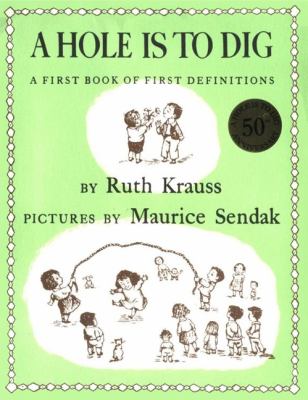
I had not read A Hole is to Dig: A First Book of First Definitions for years, long enough that I had forgotten just how good it is.
Looking again at this 1952 picture book written by Ruth Krauss and illustrated by Maurice Sendak was a joy. That’s not going to be a surprise to anyone who has been reading along with me. My admiration for Sendak, from Where the Wild Things Are to lesser known books like One Was Johnny is longstanding. My admiration for Ruth Krauss has developed more recently, based on classics like The Carrot Seed and, again, lesser known works like This Thumbprint. To have these two creators (who were friends for years) working together…a joy.
The book’s subtitle explains its theme and structure: it is a series of definitions that are aimed at kids, definitions that articulate how kids see the world. For example, the first definition is “Mashed potatoes are to give everyone enough,” and it is accompanied by a black and white Sendak drawing of a crowded dinner table with a mountain of spuds…and two hungry kids joining late.
The things defined are things kids encounter: faces, dogs, principals, toes, eyebrows, etc. Each definition is what they are to kids, like “Dogs are to kiss people.” Each illustration gives from one to, in the most crowded images, a dozen examples of the definition in action.
The hole from the title returns throughout the book: on its own page, as part of the ground definition, implied in the mud definition, on the sand page, and so on.
This is another of the pocket-sized books I’ve been reviewing recently, like Let’s Be Enemies. As was the case with the rest of these books, A Hole is to Dig is tightly focused, fitting the size well. It feels like a secret treasure. The book’s fonts reinforces this feeling: some lines are large, like public statements, some smaller, and some quite small, like private whispers.
The book was named one of The New York Times Best Illustrated Children’s Books for 1952.