This is a good book and was a fascinating read, though those two things are very different.
I noticed my library had two versions of the same book by Charlotte Zolotow. Zolotow had a long life and rich career as a writer and editor.
This book first came out in 1963. with a cover like this:
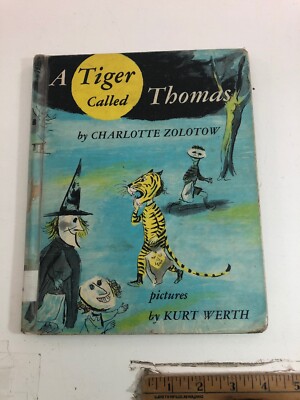
My library has two more recent versions, the 2003 version illustrated by Diana Cain Bluthenthal:

and a 2018 version with a slightly changed title, A Tiger Called Tomás:
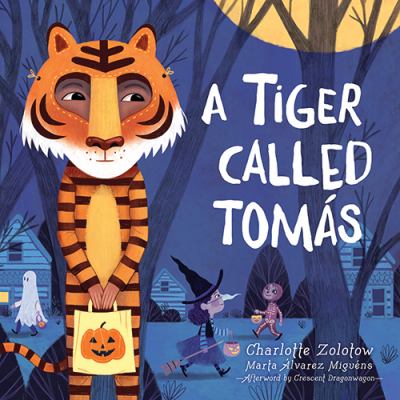
That means there are multiple versions of the same book out there. This gives a rare chance to see how different artists interpret the writer’s words, and how different publishers lay out the same story. I haven’t seen the original version yet, but the two I’ve read have vastly different layouts. For example, the text on the first page of A Tiger Called Tomás is identical with the text of A Tiger Called Thomas, but that earlier version spreads those words over the first four pages–two two-page spreads.
This fits the feeling of isolation that runs through the book really well. In all versions of the story, Thomas and his family move to a new street. Thomas feels out of place, and so just sits and watches everyone and everything…until Halloween. Then, emboldened by his tiger costume, Thomas goes trick or treating–and finds that everyone recognizes him despite the mask. By the end of the book, he has a bunch of active friendships started, and realizes these people are nice.
This book teaches lessons about empathy, friendship, and patience, but the most striking is quite subtle for a picture book: Thomas was never really as isolated as he thought. When he was watching others, they also saw him.
I’m torn about the different artwork. For style, I very much prefer Bluthenthal: the layout and physical distance underscore Thomas’s isolation. However, Marta Alvarez Miguens’s illustration for the more recent version are brighter and larger, and really evoke that feeling when you’re scared and lonely and suddenly get close to someone.
The smallest shift, from Thomas to Tomás, adds a possible reason for the boy to feel so out of place. It’s useful, but not needed: the loneliness of childhood is universal.