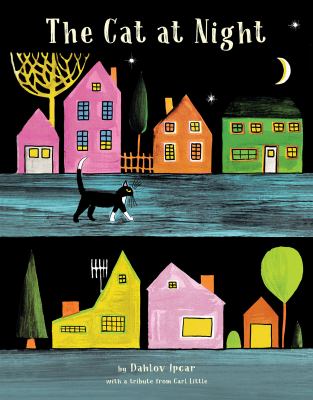
In his thoughtful afterword to Dahlov Ipcar’s 1969 picture book The Cat at Night, scholar Carl Little mentions that Ipcar said each of her books has a theme, and this one’s them was “shape recognition.”
That’s certainly true: any child who reads or looks at this book will be practicing shape recognition. However, if there was ever a case of a creator understating the value of her own work, this is it. This book starts at bedtime, as “the farmer goes to bed,” and follows the cat who is put out at night.
Ipcar gives us a scene in very dark colors–blacks and blues, usually–which might be considered human vision. She then gives us the same thing in bright colors, which might be considered cat vision. The dark human scenes are all shapes and silhouettes. The cat vision scenes are detailed and varied.
So, there is shape recognition, but this book also quietly demonstrates that not everyone sees the world the same way, and not everyone lives in the same world. There’s also a quiet thread of wonder and mystery: each night scene offers a chance to wonder, “What will we see as a cat? What’s really happening in the dark?”
Good stuff. I’ll read more Ipcar.