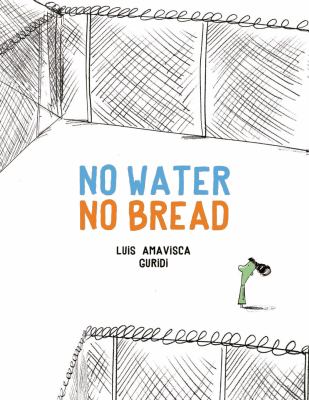
I was disappointed in Luis Avavisca Guridi’s 2016 picture book No Water No Bread.
It started so boldly, with a line unlikely to appear in most picture books: “This is the barbed wire fence.”
Immediately I was ready for Guridi to tackle difficult political topics. And these were teased, but not really engaged. Guridi establishes a situation where one group of people is on one side of the fence, and they don’t have any/enough water. The people on the other side have water, but no bread…which the first group has in abundance. Both sides ask for something from the other–either water or bread–and both sides deny the other.
That’s the adults. The kids don’t see any point to the stalemate, and appear to share and swap without hesitation. They also speculate about why their parents are this way…but without getting answers or really asking the parents. Then a third group of people show up. They have nothing. The entrenched adults draw the line and don’t share. The kids from all three groups don’t see why this is the case.
The end.
The images work well to dramatize the divisions: the people in each group are different colors, and so are their possessions. The folks who have bread are orange, the folks who have water are blue, and the newcomers are green. This lets readers immediately recognize division and interaction…but who are the pinkish fence builders who appear on the book’s two pages? Is the fence forced on people? Are they the forces of history, who imposed divisions on us then left?
I have other questions. Yes, people get divided and stay that way, and yes, kids can see/feel connections when adults do not, but why is the fence there? If people won’t share, why can’t they/won’t they trade, water for bread?
I get the goals. I applaud the effort. And…I found this unsuccessful.