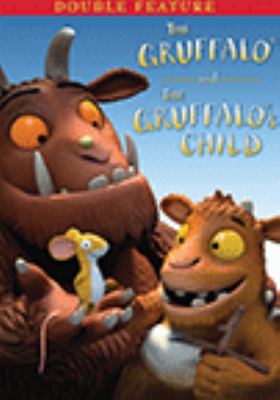
The original book version of The Gruffalo has sold well over 10 million copies. Julia Donaldson has a website for her writing, but The Gruffalo is such a big deal (in publishing and Donaldson’s career) that it has its own website. There you can explore all the sequels to and variations on the 1999 original, even sing-a-longs. In 2026, Donaldson will publish a new book in the series. It is illustrated by Axel Scheffler, who illustrated the original.
The first book is very well-crafted. It has clear, simple rhymes, well-chosen details, vivid description, and a structure that both builds and repeats. A mouse walks through the woods and encounters a series of creatures, each of whom want to eat him. The mouse escapes first the fox, then the owl, then the snake by spinning stories about a terrifying imaginary monster: the Gruffalo.
So far, so good, a basic trickster story, but then the mouse encounters the Gruffalo, who is just as big and grotesque as the mouse had made him seem. The mouse has to trick–and terrify–the Gruffalo to survive.
Last night, I watched the animated adaptation. This keeps the core story and the verse, but to reach the half-hour length, the film adds a framing story in which a mother squirrel (voiced by Helena Bonham Carter) tells the story of the mouse and the Gruffalo. Robbie Coltrane, who played Hagrid in the Harry Potter movies, voices the Gruffalo.
Some other visuals are added (such as the animals imagining the Gruffalo, one block of description at a time), and the story doubles back on itself again, with the animals figuring out they’ve been tricked. The film is, though, quite faithful to the spirit and sensibility of the original.
The film stands alone, and can be enjoyed by kids who never watched the movie, but is likely to appeal more to those who have.